Adams, D.C., Rohlf, F.J., Slice, D.E., 2004. Geometric morphometrics: Ten years of progress following the ‘revolution.’ Italian Journal of Zoology 71, 5-16. doi:10.1080/11250000409356545
Andrews, B.W., 2003. La habilidad de los artesanos de navajas prismáticas y su relación con la intensidad productiva: un análisis comparativo de datos del periodo clásico en Teotihuacán y del periodo epiclásico en Xochicalco. Cuicuilco 19, 9-34.
Archer, W., Braun, D.R., 2010. Variability in bifacial technology at Elandsfontein, Western cape, South Africa: a geometric morphometric approach. Journal of Archaeological Science 37, 201–209. doi:10.1016/j.jas.2009.09.033
Arroyo, A., Proffitt, T., Key, A., 2019. Morphometric and technological analysis of Acheulean large cutting tools from Porzuna (Ciudad Real, Spain) and questions of African affinities. Journal of Archaeological Science: Reports 27. doi:10.1016/j.jasrep.2019.101992
Baena, J., Cuartero, F., 2006. Más allá de la tipología lítica: lectura diacrítica y experimentación como claves para la reconstrucción del proceso tecnológico. In: Maíllo, J.M., Baquedano, E. (Eds.), Miscelánea En Homenaje a Victoria Cabrera. Zona Arqueológica 7, p. 144-161.
Bar‐Yosef, O., Peer, P. Van, 2009. The Chaîne Opératoire Approach in Middle Paleolithic Archaeology. Current Anthropology 50, 103-131. doi:10.1086/592234
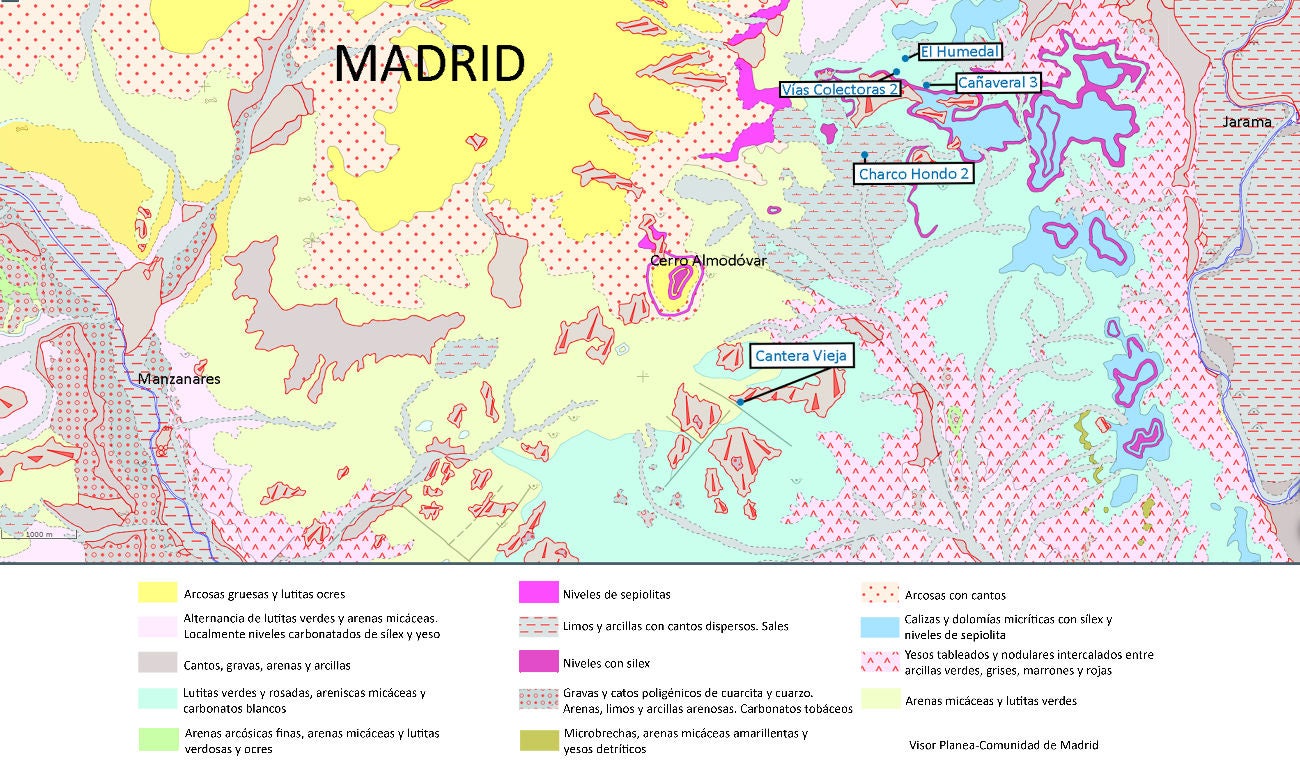
Bárez, S., Pérez-González, A., 2006. Terrazas fluviales del Pleistoceno inferior y medio del río Manzanares en Vaciamadrid: El perfil de Calamuecos y sus implicaciones geomorfológicas. Boletín Geológico y Minero 117, 351-361.
Boëda, E., 1988. Le concept Levallois et evaluation de son champ d’application. In: Otte, M. (Ed.), L’Homme de Neandertal. La Technique. Lieja, p. 13-26.
Boëda, E., 1995. Levallois: a volumetric construction, methods, a technique. In: Dibble, H.L., Bar-Yosef, O. (Eds.), The Definition and Interpretation of LevalloisTechnology. p. 41-68.
Bordes, F., 1961. Typologie du Palיolithique ancien et moyen. Cahiers du Quaternaire n.º 1, Ed. du CNRS, 2 t., (1981).
Brande, S., 1996. Advances in Morphometrics. Advances in Morphometrics. doi:10.1007/978-1-4757-9083-2
Bretzke, K., Conard, N.J., 2012. Evaluating morphological variability in lithic assemblages using 3D models of stone artifacts. Journal of Archaeological Science 39, 3741-3749. doi:10.1016/j.jas.2012.06.039
Carbonell Roura, E., Rodríguez Álvarez, X.P., Mosquera Martínez, M., Ollé Cañellas, A., Sala Ramos, R., Vaquero Rodríguez, M., Vergès Bosch, J.M., 2006. El sistema lógico analítico: una herramienta para el estudio de la tecnología prehistórica. Dialektiké: Cahiers de typologie analytique 2006 : Hommage à Georges Laplace, 2006, ISBN 84-96372-24-3, p. 44-62 44-62.
Cardillo, M., 2010. Some applications of geometric morphometrics to archaeology. In: Elewa, A.M.T. (Ed.), Morphometrics for Non Morphometricians. Springer, Dordrecht, p. 325-341. doi:10.1007/978-3-540-95853-6
Chacón, M.G., Détroit, F., Coudenneau, A., Moncel, M.H., 2016. Morphometric assessment of convergent tool technology and function during the early middle Palaeolithic: The case of Payre, France. PLoS ONE 11, 1–20. doi:10.1371/journal.pone.0155316
Clarkson, C., Hiscock, P., 2011. Estimating original flake mass from 3D scans of platform area. Journal of Archaeological Science 38, 1062-1068. doi:10.1016/j.jas.2010.12.001
Costin, C.L., 1991. Craft Specialization : Issues in Defining , Documenting , and Explaining. Archaeological Method and Theory 3, 1-56.
Eren, M.I., Lycett, S.J., 2012. Why Levallois? A morphometric comparison of experimental «preferential» Levallois flakes versus debitage flakes. PLoS ONE 7. doi:10.1371/journal.pone.0029273
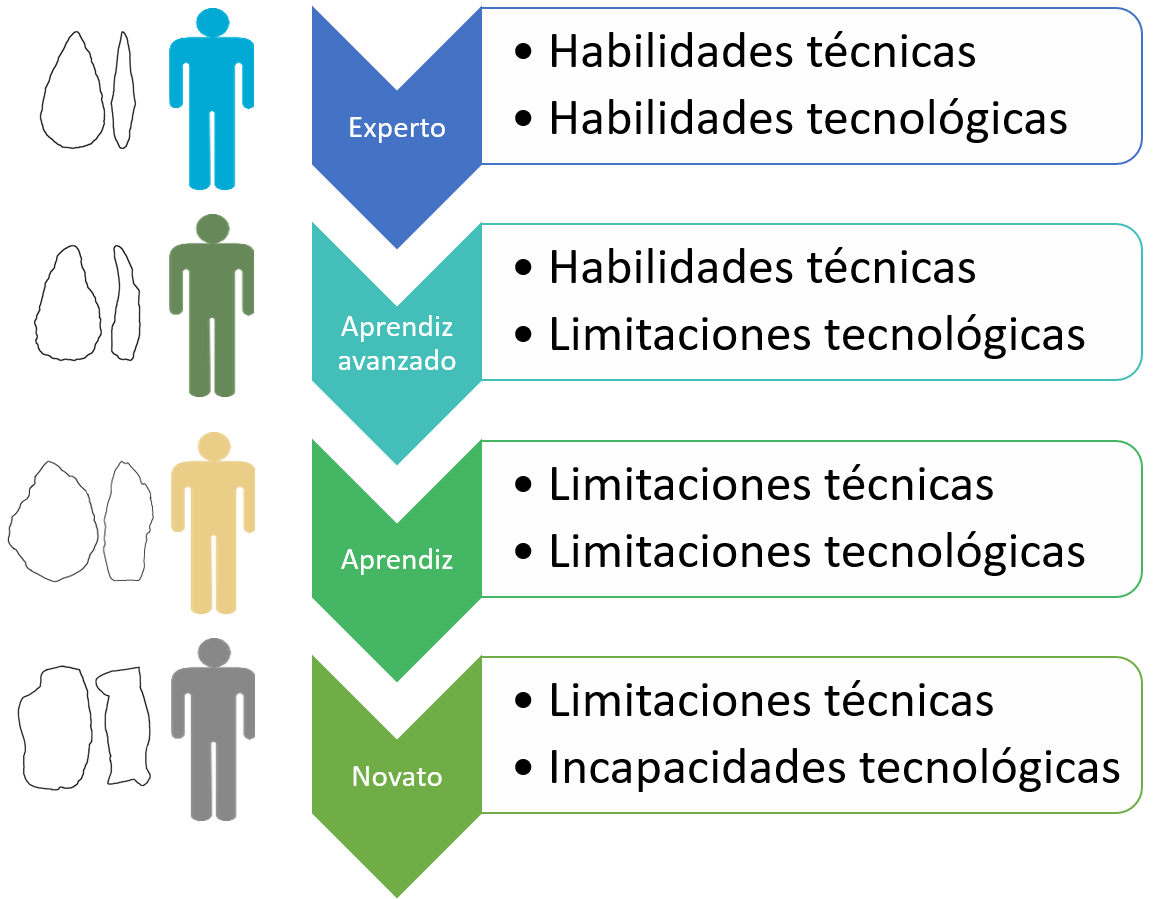
Eren, M.I., Bradley, B.A., Sampson, C.G., 2011. Middle Paleolithic Skill Level and the Individual Knapper: An Experiment. American Antiquity 76, 229-251. doi:10.7183/0002-7316.76.2.229
Eren, M.I., Roos, C.I., Story, B.A., Cramon-Taubadel, N. von, Lycett, S.J., 2014. The role of raw material differences in stone tool shape variation: An experimental assessment. Journal of Archaeological Science 49, 472-487. doi:10.1016/J.JAS.2014.05.034
Eren, M.I., Lycett, S.J., Patten, R.J., Buchanan, B., Pargeter, J., O’Brien, M.J., 2016. Test, Model, and Method Validation: The Role of Experimental Stone Artifact Replication in Hypothesis-driven Archaeology. Ethnoarchaeology 8, 103-136. doi:10.1080/19442890.2016.1213972
García-Medrano, P., Maldonado-garrido, E., Ashton, N., Ollé, A., 2020a. Objectifying processes : The use of geometric morphometrics and multivariate analyses on Acheulean tools 7, 1–16.
García-Medrano, P., Ashton, N., Moncel, M.-H., Ollé, A., 2020b. The WEAP Method: a New Age in the Analysis of the Acheulian handaxes. Journal of Paleolithic Archaeology. doi:https://doi.org/10.1007/s41982-020-00054-5
Goy, J.L., Pérez-González, A., Zazo, C., 1989. Cartografía geológica del Cuaternario, geomorfología y Memoria correspondiente de la Hoja a E. 1: 50.000 de Madrid (559).
Herzlinger, G., Goren-inbar, N., Grosman, L., 2017. Journal of Archaeological Science : Reports A new method for 3D geometric morphometric shape analysis : The case study of handaxe knapping skill. Journal of Archaeological Science: Reports 14, 163-173. doi:10.1016/j.jasrep.2017.05.013
Inizan, M., Ballinger, M., Roche, H., Tixier, J., 1999. Technology and Terminology of Knapped Stone, CREP, Nanterre.
Ioviţǎ, R., 2009. Ontogenetic scaling and lithic systematics: method and application. Journal of Archaeological Science 36, 1447-1457. doi:10.1016/j.jas.2009.02.008
Jaubert, J., 1999. Chasseurs et artisans du Moustérien, La Maison. ed. Paris.
Lin, S.C., Rezek, Z., Dibble, H.L., 2018. Experimental Design and Experimental Inference in Stone Artifact Archaeology. Journal of Archaeological Method and Theory 25. doi:10.1007/s10816-017-9351-1
Lycett, S., 2019. Built-in Misdirection: On the Difficulties of Learning to Knap. Lithic Technology 44, 8-21.
Lycett, S.J., Chauhan, P.R., 2010. Analytical Approaches to Palaeolithic Technologies: An Introduction. New Perspectives on Old Stones: Analytical Approaches to Paleolithic Technologies 1–22. doi:10.1007/978-1-4419-6861-6_1
Lycett, S.J., Eren, M.I., 2013. Levallois economics: an examination of ‘waste’ production in experimentally produced Levallois reduction sequences. Journal of Archaeological Science 40, 2384–2392. doi:10.1016/j.jas.2013.01.016
Lycett, S.J., Schillinger, K., Eren, M.I., Cramon-Taubadel, N. Von, Mesoudi, A., 2016. Factors affecting Acheulean handaxe variation: Experimental insights, microevolutionary processes, and macroevolutionary outcomes. Quaternary International. doi:10.1016/j.quaint.2015.08.021
Merino, J.M., 1967. El origen y la evolución de los complejos leptolíticos , de Laplace . Munibe 1/2, 107-118.
Pelegrin, J., 2005. Remarks about archaeological techniques and methods ofknapping: elements of a cognitive approach to stone knapping. In: Roux, V., Bril, B. (Eds. . (Ed.), Stone Knapping: The Necessary Conditions for a Uniquely Hominin Behaviour. Cambridge, p. 23-33.
Saragusti, I., Sharon, I., Katzenelson, O., Avnir, D., 1998. Quantitative analysis of the symmetry of artefacts: Lower Paleolithic handaxes. Journal of Archaeological Science 25, 817–825. doi:10.1006/jasc.1997.0265
Sellet, F., 1993. Chaine operatoire: the concept and its applications. Lithic Technology 18, 106–112. doi:10.1080/01977261.1993.11720900
Shipton, C., Clarkson, C., 2015. Handaxe reduction and its influence on shape: An experimental test and archaeological case study. Journal of Archaeological Science: Reports. doi:10.1016/j.jasrep.2015.06.029
Turq, A., 2003. De la matière première lithique brute à la mise au jour de l’objet archéologique: Propositions pour une meilleure exploitation du potentiel informatif du matèriel lithique illustrèes par quelques exemples du paleolithique aquitain.